Grosse Pointe Farms Water Damage Restoration › Cost guide
How Water Damage Restoration Cost Works in Grosse Pointe Farms
Article by the Grosse Pointe Farms Water Damage Restoration Team
Water damage restoration in Grosse Pointe Farms runs $1,195 to $5,050 per job for one or two rooms of clean or gray water. The free on-site look sets the exact number.
A Grosse Pointe Farms call is typically answered with dispatch in under 30 minutes. Your call puts a crew on the road right away.
We stand behind every job with a written guarantee that sends the crew back, not your money.
Four Jobs, Four Price Ranges, October 2026
These ranges cover the jobs we run most in Grosse Pointe Farms homes, current for October 2026. The written estimate before work starts always states the exact price, and the on-site look that produces it costs nothing.
| Job | Price Range | How It's Priced |
|---|---|---|
| Clean or gray water in one or two rooms | $1,195 to $5,050 | Per job |
| Burst pipe cleanup | $995 to $5,000 | Per job |
| Basement flood cleanup | $975 to $12,100 | Per job |
| Sewage backup cleanup | $2,900 to $10,250 | Per job |
Every price above is a range, not a quote. The signed written estimate carries the exact number, and the visit that produces it is free.
Grosse Pointe Farms in the national flood claims file
4 flood claims in Grosse Pointe Farms sit in the federal record, the first in 1985 and the latest in 2021. The busiest year was 2021, with 3 of them. There are too few paid claims here for a typical payout to mean anything, so none is shown.
| Lowest level of the building | Claims | Share |
|---|---|---|
| finished basement | 2 | 50% |
| unfinished basement | 1 | 25% |
| not recorded | 1 | 25% |
Only flood insurance claims appear here. A sewer backup or a pipe break paid by a home policy does not show up in this data.
Source: OpenFEMA, FIMA NFIP Redacted Claims (NfipClaims v3), read 2026-11-03, grouped by NFIP community (City of Grosse Pointe Farms).
Why Older Plumbing Raises the Price Here
Most houses in Grosse Pointe Farms were not built for a modern flood. The median home dates to 1946, and about 58 percent of the city's 4,199 housing units went up before 1950 (U.S. Census Bureau, American Community Survey). Original galvanized supply lines, cast iron drains and plaster walls do not behave like new construction once they take on water.
Plaster holds water longer than drywall and often needs more drying time to read dry on a meter. Old cast iron can crack at a joint instead of failing cleanly, which turns a small leak into a slow one that was running for days before anyone saw it. Both facts push the dry-out line item up in a pre-1950 house, and the written estimate states that line item on its own.
The city's median owner-occupied home value is $442,000 (U.S. Census Bureau, American Community Survey), so most jobs here also carry higher-grade trim, built-ins and flooring to protect during the dry-out, not just the studs behind them.
The Inland Side of the City Still Backs Up
Grosse Pointe Farms runs two different sewer systems. The Lakeside District, closest to the water, got separate storm and sanitary sewers in 1999 and 2000. The Inland District, away from the lake, kept a combined system that routes stormwater and sewage through the same pipe (C&G Newspapers).
That combined pipe is why a hard rain can push sewage back into an Inland basement instead of just flooding the yard. After the rain of late May 2011, 288 of the city's roughly 4,000 homeowners filed flood complaints with the city in the days that followed (Patch Grosse Pointe).
A separation project for the Inland District, budgeted at about $11 million, began in 2025. That 2025 report set a target finish date of April 10, 2026, and we have not confirmed that the work finished (C&G Newspapers). Until every block is on the new pipe, a sewage backup job here still means contaminated water, not clean water, and the sewage price applies, not the water price.
A Worked Example: A Flooded Basement
Take a basement that took on four inches of water after a hard rain, with a finished rec room and a furnace standing in the path. A job like that lands near the top of the $975 to $12,100 basement flood range, because finished walls, flooring and a furnace all add drying steps and replacement work that bare concrete and a sump pit do not.
A basement with sealed concrete floors, no drywall and no finished ceiling sits at the other end of that same range. Removal is just the standing water and a meter check on the framing, so the job closes faster and for less.
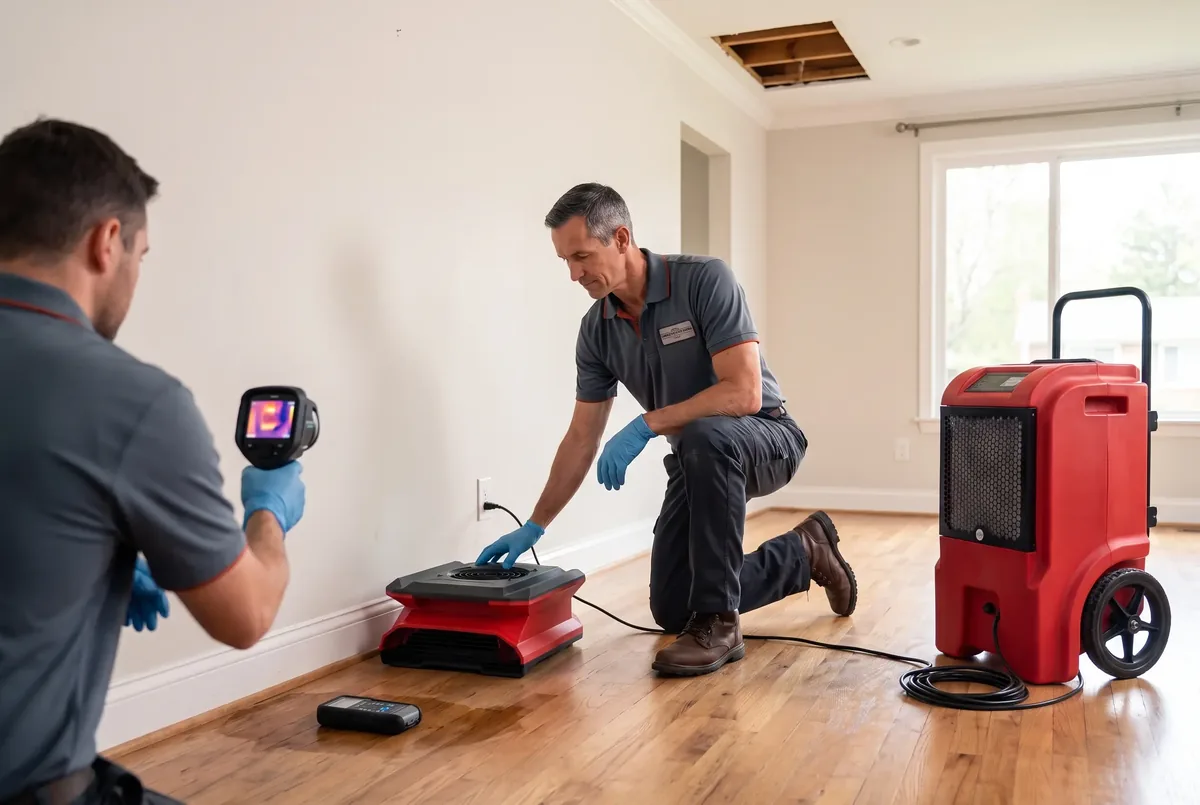
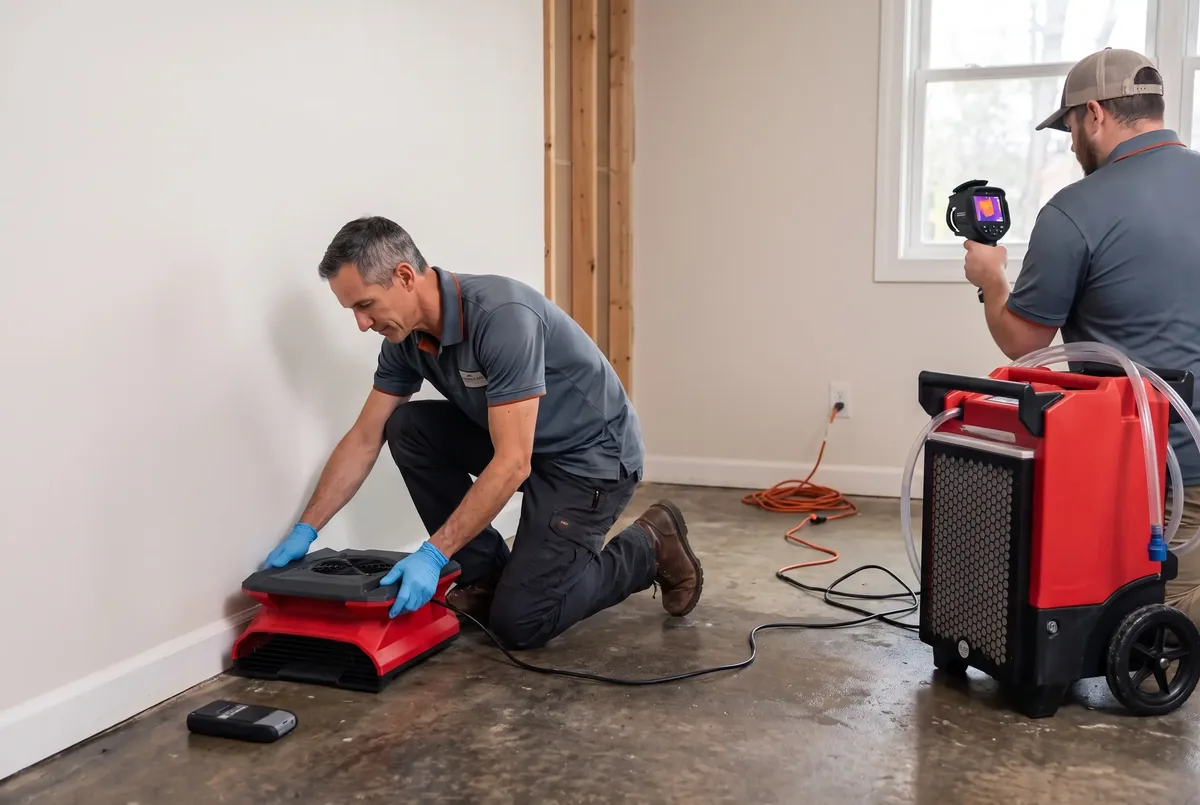
Every basement job starts the same way regardless of finish. Removal comes first, then a moisture meter checks the framing, the subfloor and anything built in. Equipment stays in the house until the readings come back dry, and the written estimate lists what pushed the number up or down before anyone signs it.
If the storm also raised Lake St. Clair high enough to push water up from the lake side, the job can add a separate line for grading or a sump check, written out on its own before any work begins.
Does Insurance Cover a Flooded Basement?
Most homeowner policies cover water damage that starts suddenly inside the house, such as a burst pipe or a failed appliance line. A sewage backup from the street or a sewer main is usually a separate add-on, called a sewer backup endorsement, and it has to already be on the policy before the loss happens.
The deductible comes off the claim first, and the insurer, not the restoration company, decides what the policy pays. A written estimate with the dried square footage and the meter readings is the document an adjuster asks for, so we build every job to answer that document, not to guess at what gets approved.
Our claims guide walks through what a Michigan policy usually covers, what the sewer endorsement adds, and what questions to ask the carrier before the crew leaves. Reading it before the adjuster calls saves a second phone call later.
How the Final Number Stays Honest
Every dry-out job here runs on a moisture meter, not a calendar. Equipment stays in the house until the framing, subfloor and affected walls read dry, then it leaves. That is why a basement job and a one-room water job both get the same rule: the meter decides when the work is done, not a fixed day count written into the estimate.
The on-site look that builds the first number costs nothing. After that look, the number goes into a written estimate the customer reads and signs before any equipment runs. If the job turns out larger once walls open, a sewage line is found, or an extra room shows damage, that change gets written down and signed too, with the square footage that drove it.
Homes here hold higher replacement value, at a median of $442,000, so we price contents and finish work by what is actually in the house, not a flat citywide rate.
Questions, Answered with Care
How much does water damage restoration cost in Grosse Pointe Farms?
A job covering one or two rooms of clean or gray water runs $1,195 to $5,050. The exact number comes from a free on-site look, written into a signed estimate before work starts.
Why do older homes in the Farms cost more to dry?
The median home here was built in 1946, and about 58 percent of houses predate 1950. Plaster walls and cast iron pipes hold water longer and take more time to read dry on a meter.
What does a basement flood cleanup cost?
Basement flood cleanup runs $975 to $12,100 per job. A bare concrete basement with just a sump pit lands near the low end. A finished basement with drywall, flooring and a furnace in the water lands near the high end.
Is a sewage backup priced differently than a water job?
Yes. Sewage backup cleanup runs $2,900 to $10,250 per job, because contaminated water needs more removal and disinfection than clean or gray water.
Does my homeowner policy cover a sewage backup?
Usually only with a separate sewer backup endorsement added before the loss. Sudden water from a burst pipe is more often covered outright. The deductible applies first, and the insurer decides the payout.
How fast should wet materials be dried out?
The EPA says to dry wet materials within 24 to 48 hours to limit mold growth (EPA). That window is why the on-site look and the written estimate happen fast, not days later.
Is the on-site estimate really free?
Yes. The visit that measures the damage and sets the price costs nothing. You see the written number and sign it before any equipment runs in the house.
Start With a Free Quote
Call (313) 509-3836.
A Grosse Pointe Farms call is typically answered with dispatch in under 30 minutes. Your call puts a crew on the road right away.
A free on-site estimate comes with every call.
We stand behind every job with a written guarantee that sends the crew back, not your money.